
Delaware City Directory Collections by Year
Eleven verified digitized Delaware directory volumes run from 1859-60 through 1922. They include city books, county-wide books, street guides, and household sections. The online run is useful because it identifies a resident, street, route, occupation, or taxpayer context at a particular edition date. It does not establish that every local publication is online, or that a person stayed at the same address between editions.
| Collection | Years | Where Held | Access |
|---|---|---|---|
| Williams' Delaware Directory | 1859-60 | Ohio Memory, Delaware County Historical Society collection | Free online |
| Delaware City Directory and Postal Tablet Directory | 1880-81; 1890-92 | Ohio Memory collection | Free online collection |
| Polk, Armitage, Wiggins, and Danford-McCuskey books | 1893-94; 1897; 1899; 1901 | Ohio Memory collection | Free online |
| Baker street and householder guides | 1905-06; 1908-09 | Ohio Memory collection | Free online |
| Farm Journal and Townsley's books | 1915; 1922 | Ohio Memory collection | Free online |
The digitized set ends with the verified 1922 volume. Later books may be held locally, but no exhaustive post-1922 shelf list or final print year was verified. The Delaware County District Library and Cryder Research Library are the appropriate confirmation path for a later edition.
Note: A directory date identifies the edition's evidence, not an exact move-in or move-out date for a household.
Eleven Delaware City Directories Online
Ohio Memory hosts the Delaware County Historical Society digitized collection and offers a directory-title search route. The 1859-60 Williams volume includes a city guide, resident and business lists, and a Business Mirror. The 1880-81 volume adds resident, occupation, taxpayer, and street material. The 1901 book includes an alphabetical resident section and a Street/Number Directory on pages 101 through 123.
For the growing city, the 1905-06 Baker volume has a Street Guide and Householders section on pages 177 through 208, followed by county residents. Its 1908-09 successor has street and household pages as well. Townsley's 1922 volume places its street and householder material on pages 15 through 54, then residents on pages 55 through 160. Those layouts make a name-first and street-first check possible within the same edition.
Ohio Memory's collection overview introduces the historical society materials behind the digitized set.
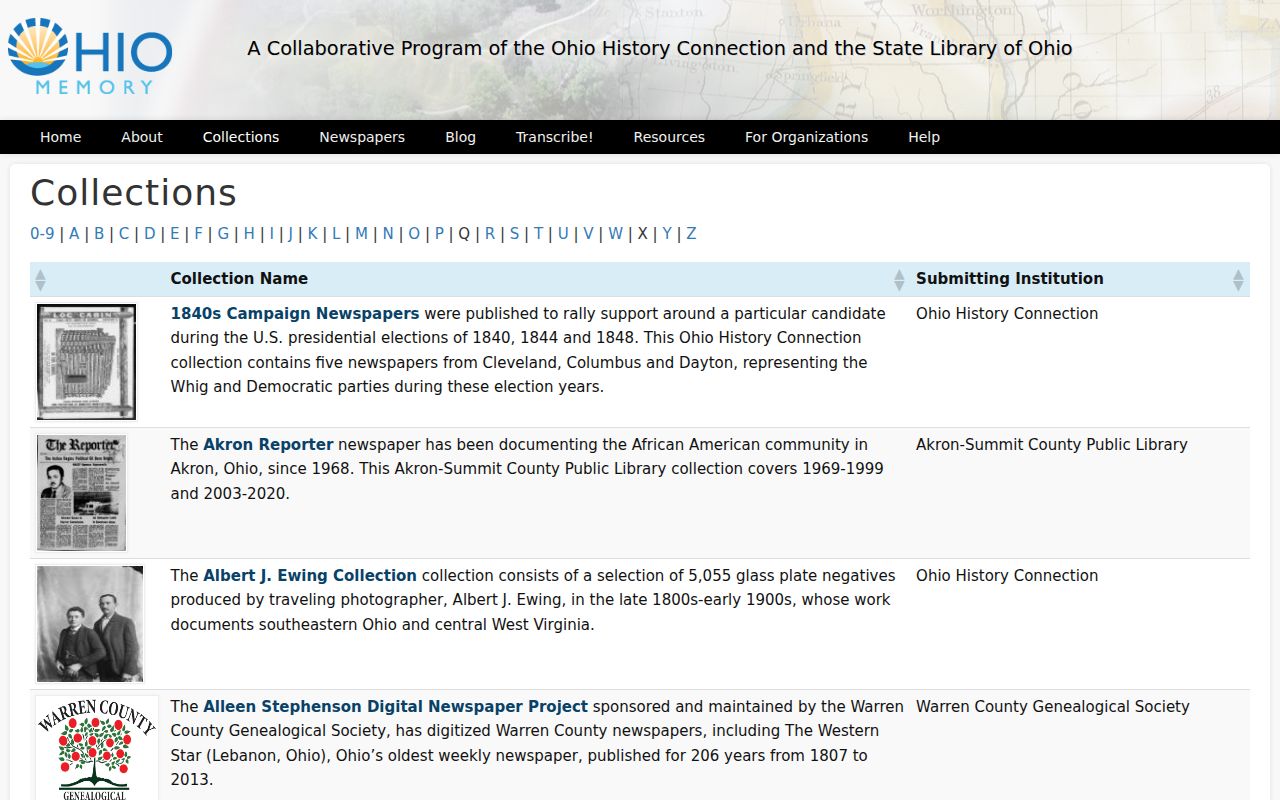
The collection view is a discovery layer. Record the volume title, edition year, page, and the spelling actually printed before comparing another source.
Delaware City Directory Library Shelf
The Delaware County District Library Local History Room is at the Delaware Main Library, 84 E. Winter St. Its local-history material is for in-library use. The collection includes historical Delaware City and County directories, cemetery and tombstone records, county atlases, church histories, census microfilm and indexes, family histories, the Bouic Index, and Delaware High and Ohio Wesleyan yearbooks. Delaware Gazette microfilm runs from 1821 to today.
The library lists Genealogical Society help hours on Thursday from 10 to 11:30 and 1 to 4:30, and Saturday from 10 to 1. Appointments use 740-369-4375 or delawareohiogenealogy@gmail.com. The library's research offerings also include in-library Ancestry Library Edition, HeritageQuest, FamilySearch, Fold3, death notices, Delaware County Memory, and online Sanborn maps. The searchable online Gazette collection covers 2013 forward, with full images beginning in 2025.
A Delaware County District Library research page identifies its database and local-resource paths.
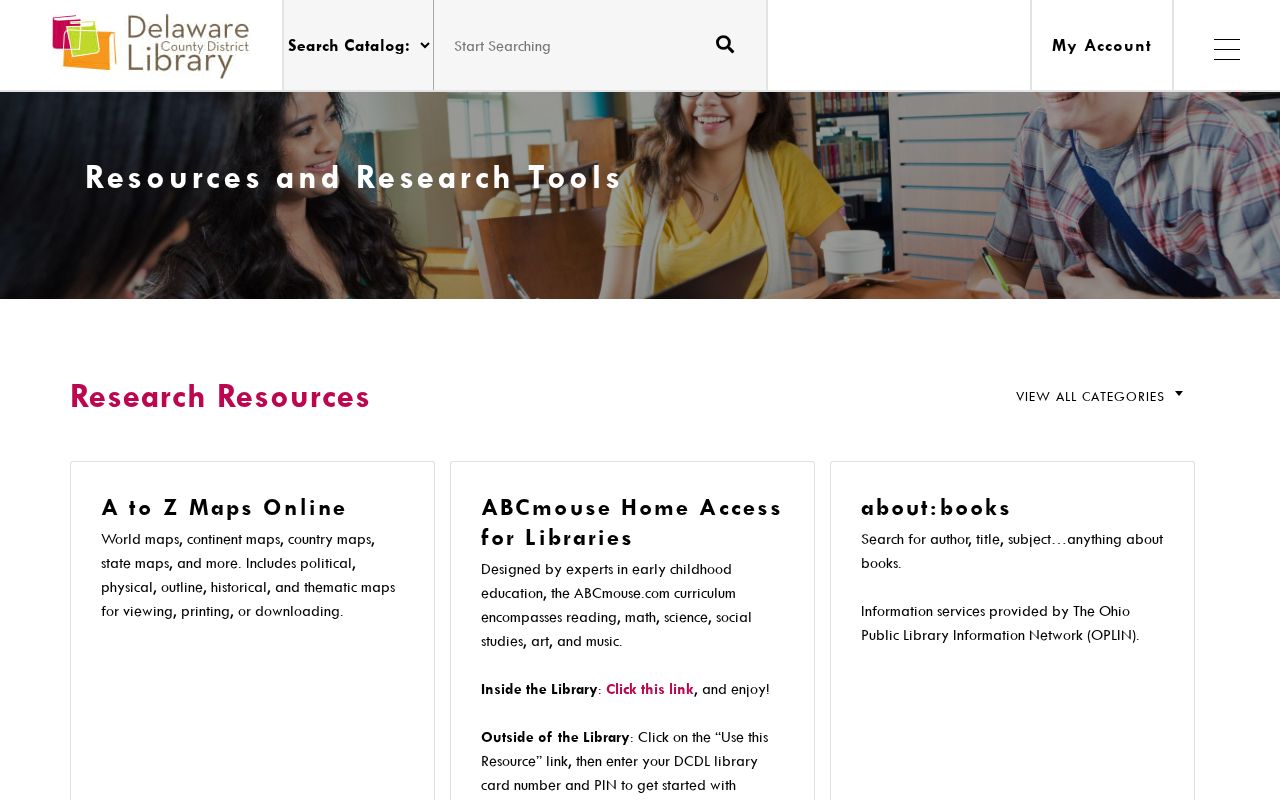
Library resources can supply a census, newspaper, yearbook, or map check when a directory initial or street form remains uncertain.
How Delaware City Directory Entries Read
The inspected 1915 Farm Journal Directory uses surname-first entries and can combine initials or given names with a spouse in parentheses, child count, occupation, tenure notation, acreage, house-and-lot notation, a street or rural route, and occasional telephone or map information. It gives more household detail than a bare address list. It still reflects only what that book printed for its edition.
| Name form | Surname first, then given name or initials, useful for matching an alternate spelling. |
|---|---|
| Household clue | A spouse in parentheses and sometimes a child count. |
| Work clue | Occupation as printed in the volume. |
| Place clue | Street, house-and-lot notation, or a rural route. |
| Tenure clue | Notations such as O H&L or T H&L, which should be transcribed rather than expanded without a key. |
An entry such as “Allen, E. C. (Fronia), 2 children, chief engineer, O H&L, 178 S Franklin St” ties several clues to one printed line. Compare the full combination, not a surname alone. The local abbreviation key was not found, so an interpretation of any shorthand should remain tentative.
- Street or householder section
- A part of a volume arranged by street and number or by household, rather than the usual alphabetical name sequence.
- Householder
- The person or household label printed at an address. It does not prove every person who lived there.
- Abbreviation key
- A publisher's explanation of shorthand. No verified local key was located for the 1915 notation.
1915 Delaware Directory Household Clues
The 1915 Farm Journal volume is a distinctive Delaware source because it can put a spouse, children, occupation, tenure notation, acreage, and street or rural-route detail in one entry. Use its printed date, 1915, rather than treating the metadata range of 1915-20 as a 1920 edition. One entry may point to a family relationship or a farm setting that an alphabetical city list does not show.
Rural-route wording deserves care. It should not be projected onto a current numbered street without support from a map, a later directory, or a recorded property description. A Delaware County atlas can help place old road and township context, while the directory keeps the household clue tied to its own publication date.
Note: Preserve initials, punctuation, and uncertain shorthand when copying a historical entry into research notes for comparison.
Tracing Families with Delaware City Directories
Following a household through Delaware city directories works best as a dated sequence. Start with the most specific name form and address available. Then compare nearby editions, retaining the edition year and page each time. A person who vanishes from one book may have moved, died, changed the printed name form, or simply been omitted. A disappearance alone does not choose among those explanations.
- Locate the first likely name entry and copy the edition, page, address or route, spouse clue, and occupation exactly.
- Check the next available local volume for the same surname, initials, spouse, and place rather than relying on one field.
- Use a street or householder section, where the volume has one, to test the address and nearby household context.
- Pair directory years with census microfilm or indexes for household context on a census date.
- Use an obituary index, Gazette notice, cemetery source, probate record, or deed only for the question that source can answer.
The local Genealogical Society obituary index contains more than 69,000 newspaper-index records from 1821 to 2011, with visible ID, name, page, and year fields.
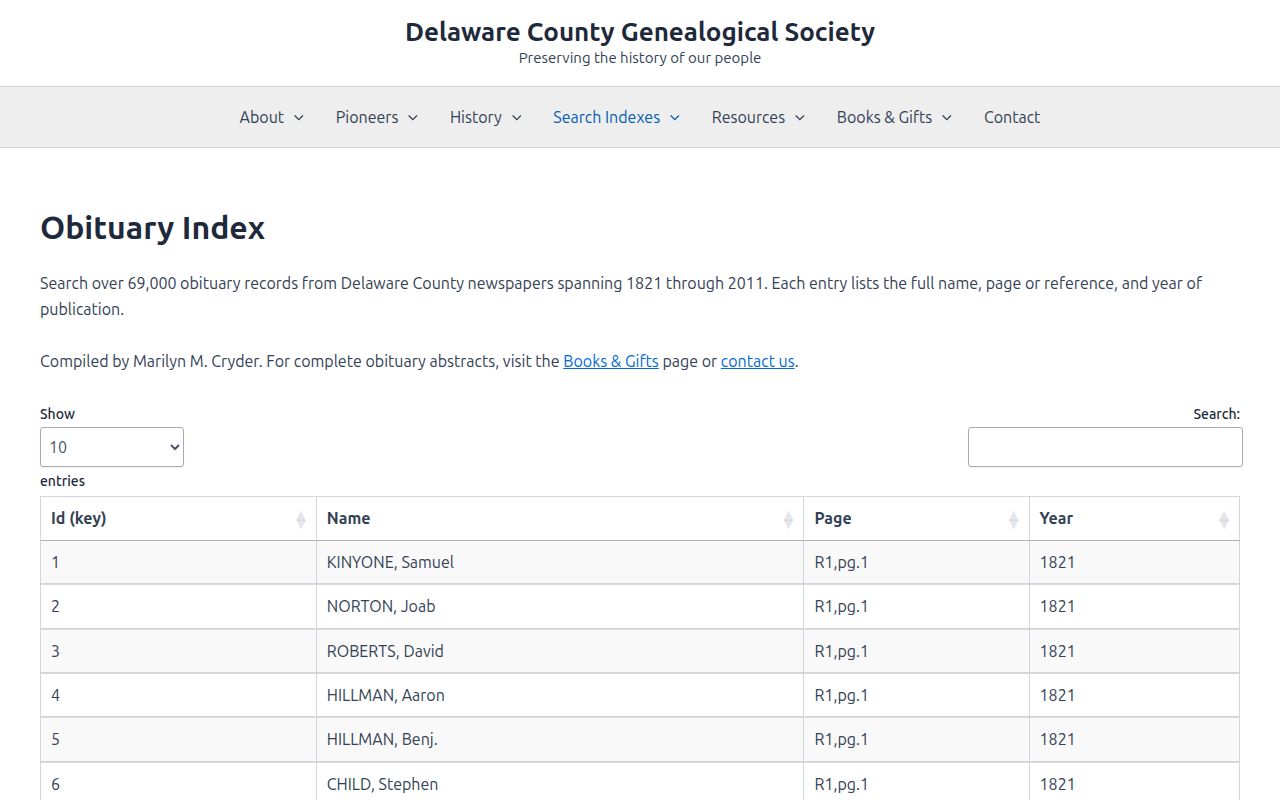
An obituary-index hit is a locator. Consult the cited notice or another record before treating a relationship or date as confirmed.
Delaware City Directory and Cryder Holdings
Cryder Historical Center and Research Library, at 157 E. William St., holds Gazette photographs and newspapers, obituary archives, maps and atlases, clipping files, Delaware City and Rural Route Directories, Ohio Wesleyan and high-school yearbooks, and Mendenhall property transfers for 1800-1891. Those specialized collections matter when a directory uses a rural route, a partial name, or a local place reference that does not fit a modern address form.
Cryder posts Sunday hours of 2 to 5 and Wednesday hours of 10 to noon and 1 to 5, with other times by appointment. Its contact number is 740-369-3831 ext. 2. The library's 2024 report says Cryder catalogued 2,335 items that year and had 12,153 PastPerfect entries online. Its research-library description lists the local holdings.
Cryder's rural-route books and transfer files are companion evidence, not a substitute for a directory page or a recorded deed.
Delaware City Directories with Newspapers
Directories gain strength when another dated source agrees. The Delaware Gazette microfilm at the library reaches back to 1821. Ohio Wesleyan and local high-school yearbooks can add school context. Delaware County Memory includes 1827-28 tax duplicates, Marriage Records 1835-45, transcribed wills from 1812-35, and Sunbury News material. Each source has a different purpose, so a match should be recorded as corroboration, not collapsed into one claim.
For a family-history question, an obituary index may identify the right newspaper page while a directory separates people with a common surname by occupation, spouse, route, or street. The Ohio Memory run, library microfilm, and archive shelves give a practical path across those formats. Historical Society material also preserves the county's broader settlement and migration context, but oral history and a directory entry answer different questions.
Note: A newspaper notice is dated published material, not a correction to a vital, court, or property record.
Delaware County Record Eras
Directory research often crosses a change in custodian. Delaware County was established on February 10, 1808, and Common Pleas first met that June. The county's records-era map lists marriage records from 1835 forward, birth and death books from 1867 to 1909, probate from 1850 to 1950, and Common Pleas material from the 1820s. A directory can connect a name to a date, but the follow-up record may be held elsewhere.
| 1808 | Delaware County was established; commissioner journals begin in this era. |
|---|---|
| 1821 | Delaware Gazette microfilm begins at the library. |
| 1859-60 | The earliest verified digitized Delaware directory volume. |
| 1922 | The last verified volume in the identified online run. |
The historic courthouse dates to 1868-69. A 2020 restoration found newspapers, invoices, envelopes, blueprints, and an 1897 penny. That discovery illustrates why local repositories can preserve context beyond an online directory search.
Delaware City Directory Gaps After 1922
The research verifies a digitized run through 1922, not a complete end point for local publishing. For a later Delaware city directory, ask the Delaware County District Library or Cryder staff to confirm a specific year or shelf volume. Library and archive holdings are also the better route when a scanned page is unclear, a rural directory is needed, or a nearby edition matters.
Modern address-keyed records are a different research track. When the question changes from a historical household entry to a present parcel or recorded conveyance, use the Delaware street directory for the county's current address-record approach. Keep the two trails distinct: a historic printed entry records its own date, while a current record has its own custodian and access limits.